彪码野郎

  • 首页

  • 分类

  • 归档

实现二叉树前序、中序、后序遍历

发表于 2019-09-13 分类于 数据结构与算法 阅读次数:

前言

遍历二叉树是二叉树知识中的基础,有递归版本和非递归版本,这里递归的版本比较容易,所以我们只说前序遍历的递归形式,剩下的中序和后序由读者自行实现。本文着重写非递归形式的遍历。除了前中后序遍历外各位也可以自行实现层序遍历(一层一层遍历)。

前序、中序、后序遍历的定义

最简单的理解

  1. 前序遍历:对于每个节点而言,先输出自身,再输出左子树,最后输出右子树的。(中左右)
  2. 中序遍历:对于每个节点而言,先输出左子树,再输出自身,再输出右子树。(左中右)
  3. 后序遍历:对于每个节点而言,先输出右子树,再输出左子树,再输出自身。(右左中)

我们深入剖析一下这里面到底发生了什么。

每次进入新节点(current)都进行以下操作:

(下面的”操作”为输出或其他行为)

  • 前序遍历:首先操作当前节点current,接着进入并操作current.left,而后返回到current,再进入并操作current.right,最后返回current。

  • 中序遍历:首先进入并操作current.left,接着返回并操作current,再进入current.right并操作,最后返回current。

  • 后序遍历:首先进入并操作current.right,接着返回并操作current,而后再进入current.left并操作,最后返回current。

可以发现,我们在遍历二叉树的时候都会进入*每一个节点(current)三次,
*(①进入current,②从左子树返回current,③从右子树返回current)

而这三次分别对应前中后序遍历。

换一种说法,对于当前节点current,一定会经过3次。

若第一次进入current并进行操作的则是先序遍历。

若第二次进入current并进行操作的则是中序遍历。

若第三次进入current并进行操作的则是后序遍历。

文字过多可能会比较晕,下面看一下例子:
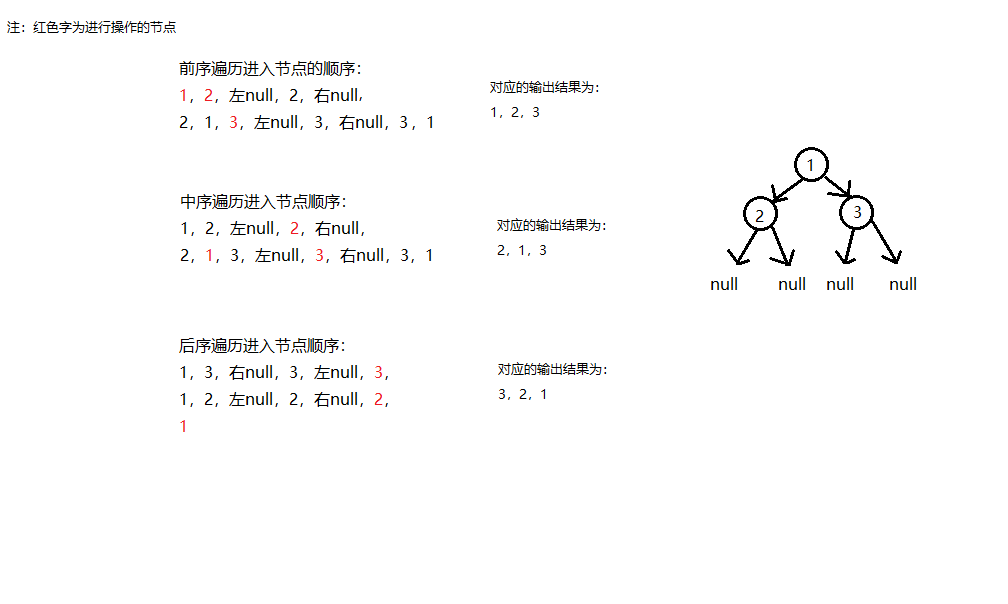
此处仅是一个很简单的例子,读者可自行画一个大一点的树进行观察练习。

递归版本

因为递归版本比较简单,所以此处仅提供前序遍历的递归版本。

1
2
3
4
5
6
7
8
9
10
11
public static void preOrderRecur(Node head) {

if(head == null)
return;
//先打印自身
System.out.println(head.value);
//再打印左子树
preOrderRecur(head.left);
//再打印右子树
preOrderRecur(head.right);
}

非递归版本

先序遍历

  1. 准备一个栈并让根节点入栈。

  2. 把栈顶输出作为current,并输出,然年压入current的左节点,最后压入current的右节点。(因为栈的性质后进先出)。

1
2
3
4
5
6
7
8
9
10
11
12
13
14
15
16
17
18
19
20
21
public static void preOrderUnRecur(Node current) {
//为什么不用队列?
//因为队列是按顺序一直往下,树本身就是往下的且不能回头,
// 但你要遍历所有节点必须要能返回上一层,所以我们用栈。
if(current != null) {

Stack<Node> stack = new Stack<>();
stack.push(current);
while(!stack.isEmpty()) {
current = stack.pop();
System.out.println(current.value);
//栈顶优先是当前节点的右节点(后进先出)
if(current.right != null) {
stack.push(current.right);
}
if(current.left != null) {
stack.push(current.left);
}
}
}
}

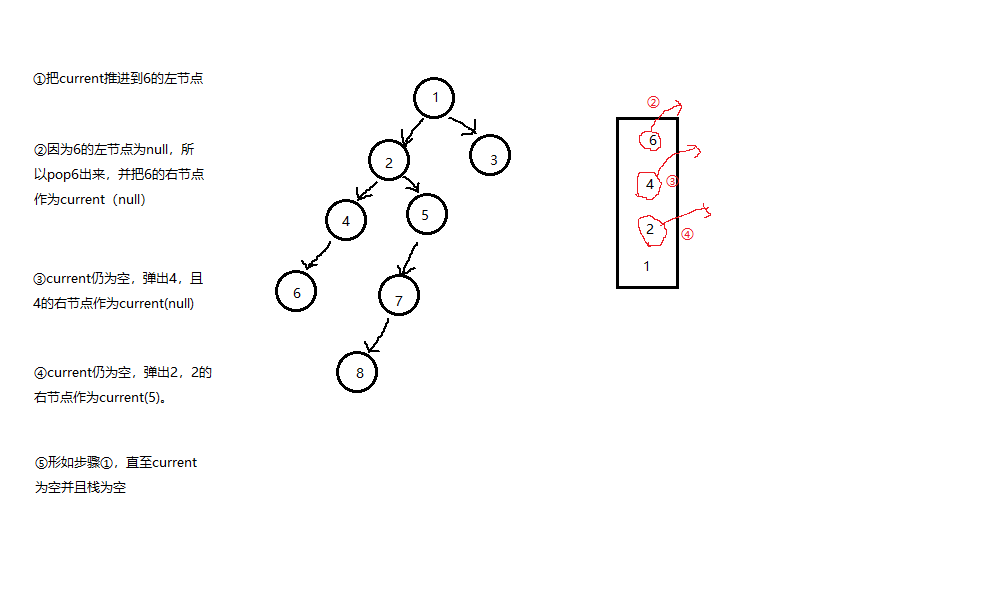
中序遍历:

  1. 若当前current不为null,则current入栈,然后向左节点推进(current = current.left)。直到current为null。
  2. 若当前current为null,而栈中仍有值,则pop一个输出,并让其右节点作为current,回到1。
  3. 直到current为null,栈也为空即结束。

建议兄弟萌把整个流程走一遍,这样就有感觉了。

1
2
3
4
5
6
7
8
9
10
11
12
13
14
15
16
public static void inOrderUnRecur(Node current) {
if(current != null) {
Stack<Node> stack = new Stack<>();

while(!stack.isEmpty() || current != null) {
if(current != null) {
stack.push(current);
current = current.left;
}else {
//左节点为空,就右节点,pop到没有位置
current = stack.peek().right;
System.out.println(stack.pop());
}
}
}
}

后序遍历

后序遍历很有意思,他和前序遍历十分相像。

前序遍历的顺序是中左右,而后序遍历为左右中。

回头看一下前序遍历,我们可以把左右的顺序调节一下,变成中右左,再把它倒序,就是我们要的左右中了。

1
2
3
4
5
6
7
8
9
10
11
12
13
14
15
16
17
18
19
20
21
22
public static void posOrderUnRecur1(Node current) {

if(current != null){

Stack<Node> stack1 = new Stack<>();
Stack<Node> stack2 = new Stack<>();
stack1.push(current);
while(!stack1.isEmpty()) {
current = stack1.pop();
stack2.push(current);
if(current.left != null) {
stack1.push(current);
}
if(current.right != null) {
stack1.push(current);
}
}

while(!stack2.isEmpty()) {
System.out.println(stack2.pop());
}
}

补充:层序遍历

介绍

嘻嘻,没想到吧,我有补充的一天。因为在写序列化的时候,发现自己还漏了一种层序遍历没写,所以来补啦,兄弟萌可以看leetcode:102。有层序遍历定义及其题目。

这里之说以下大致的思路及编码时要注意的细节,因为leetcode官方已经给出了较为详细的解释。那么开始吧。

递归版

  • 大致思路,用一个链表(Levels)装每一层的数据,每一层的数据同样用一个链表来装。也就是这样[1,[2,3],[4,5,6,7]]。相信机智的你已经理解了,下面来实际编码吧。
1
2
3
4
5
6
7
8
9
10
11
12
13
14
15
16
17
18
19
20
public List<List<Integer>> arrayList = new ArrayList<>();
public List<List<Integer>> levelOrder(TreeNode root) {
if(root == null) return arrayList;
level(root, 0);
return arrayList;
}

public void level(TreeNode head, int floor){
if(arrayList.size() == floor) {
arrayList.add(new ArrayList<Integer>());
}
arrayList.get(floor).add(head.val);
if(head.left != null) {
//注意在进入左右子树的时候,应该用floor + 1 而不用 ++floor,因为你左子树++floor,而右子树又++,会造成左右子树不在同一层
level(head.left, floor + 1);
}
if(head.right != null) {
level(head.right, floor + 1);
}
}

非递归版

  • 这里我们需要要队列,先把根节点放入队列中,然后遍历这个队列(遍历过程中会有相应的插入)直到队列为空就表明层序遍历结束了。下面说明一下每次遍历队列中的操作
    1. 把队列的头先poll出来(这里把poll出来的节点称作为poller)
    2. 检查poller是否有左右节点,若存在则offer进去。(注意顺序!先左后右)

文字表述仍存在一定疑惑,下面看下图片吧。
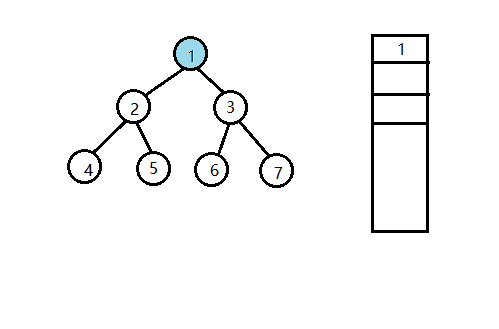
把1加入队列中,蓝色节点表示新加入的节点
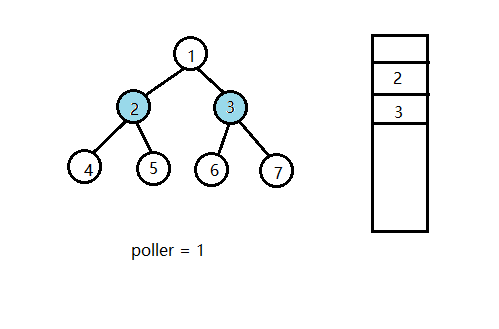
把1poll出来,与之相应的把1的左右节点加入队列中
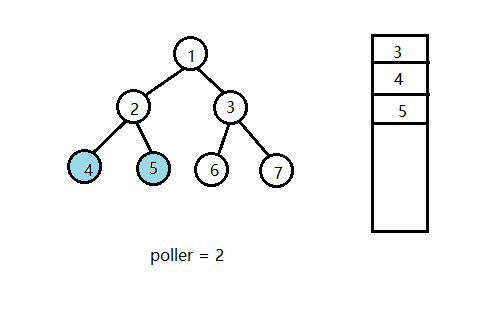
把2poll出来,与之相应的把2的左右节点加入队列中
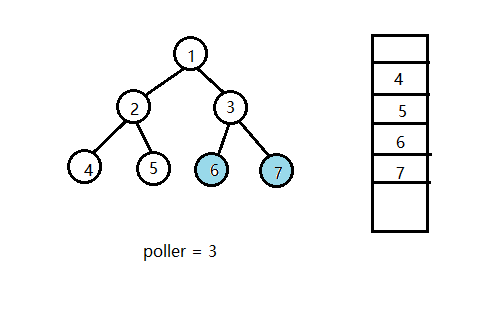
把3poll出来,与之相应的把3的左右节点加入队列中

  • 我们利用队列先进先出的特点把树按从左到右的顺序加入队列中,所以右节点节点永远都不会早于其父节点或左兄弟节点行动。

下面来看下实际代码吧

1
2
3
4
5
6
7
8
9
10
11
12
13
14
15
public static void levelOrderNoRec(Node root) {
if(root == null) return;
Queue<Node> queue = new LinkedList();
queue.offer(root);
while(!queue.isEmpty()) {
Node poll = queue.poll();
System.out.println(poll.value);
if(poll.left != null) {
queue.offer(poll.left);
}
if(poll.right != null) {
queue.offer(poll.right);
}
}
}
两个单链表相交的一系列问题
maven基础
  • 文章目录
  • 站点概览
Weapon

Weapon

40 日志
6 分类
4 标签
  1. 1. 前言
  2. 2. 前序、中序、后序遍历的定义
  3. 3. 递归版本
  4. 4. 非递归版本
    1. 4.1. 先序遍历
    2. 4.2. 中序遍历:
    3. 4.3. 后序遍历
  5. 5. 补充:层序遍历
    1. 5.1. 介绍
    2. 5.2. 递归版
    3. 5.3. 非递归版
© 2019 Weapon
由 Hexo 强力驱动 v3.9.0
|
主题 – NexT.Pisces v7.3.0